The Single-Symbol Trap in Reading Art
The single-symbol trap turns an artwork into a code to crack. Learn to test symbolic readings against relationships, context and competing explanations.
You see a key in a painted hand and think “secrecy”. The single-symbol trap in reading art is assuming the object itself settles that meaning, before its use, setting and connection to other details have had a say.
Separate the object from the claim
Choose a detail that seems symbolically charged: a bird, bowl, doorway, candle or folded letter. Record what the image shows about it—its material, condition, position and use—then mark any proposed meaning as an inference. A sealed letter is visible; “a message about betrayal” is a claim that needs support.
This distinction matters because familiar symbols are tempting shortcuts. A skull can suggest mortality, but it can also be a specimen, a prop or a motif. Start with the particular work, not a list of meanings attached to the object in other settings.
Take in the whole artwork before examining a detail closely. On a screen, avoid cropping away the surrounding scene: a crop can make an object seem isolated or central when it is not.
Test a symbol reading in its setting
Ask what sort of place the image shows and what activity is taking place. A fruit on a market stall, held in a portrait or painted beside a skull sits in a different web of clues each time. Setting does not decode the object, but it can make some readings more plausible and others less so.
Check whether the object has a practical role in the scene. Tools may belong to a workshop; food may be part of a meal; a candle may simply light a room. Visual prominence is not proof of symbolic importance: a bright object may draw attention to balance the composition or identify a figure.
Notice what the image leaves unclear, too. If the place or activity cannot be identified confidently, do not supply a definite story just to make the object’s meaning feel settled.
Follow the object’s relationships
Look at what people do with the object and how other details respond. A key beside a locked box suggests a different possibility from a key hanging unused on a wall. If one figure passes it to another, the exchange may raise questions about access, trust or authority; the gesture offers evidence, but not a final answer.
Check for repetition, contrast and visual echoes. A fresh flower beside a fallen one might invite a reading about change, while repeated shapes or colours may link objects. Ask whether the pattern contributes to a possible meaning or simply organises the image’s surface.
Use the same test for gestures. Does a figure hold an object close, point towards it, turn away or pass it on? Does another person look or respond? These links make a stronger case for an interpretation than a symbol’s familiar association on its own.
Compare readings with what the image shows
Keep a small set of plausible readings and test each against the same visible details. For every interpretation, name what supports it, what complicates it and what remains unknown.
- Object and action: Check what the object is doing in the scene; if it serves an ordinary practical purpose, then consider that explanation before assigning symbolic weight.
- Setting: Check whether the place or activity supports the reading; if it does, then retain the reading as a possibility, but if the setting is unclear, keep the claim tentative.
- Relationships: Check who handles, notices or avoids the object; if those actions fit your interpretation, then explain the link, but if nobody responds to it, consider a less symbolic role.
- Repetition: Check whether the object or a related motif recurs; if the pattern changes meaningfully, then test a reading based on that change, but if it merely repeats, do not treat repetition as proof.
- Alternative: Check whether another explanation fits the same details; if it accounts for more of the scene, then favour it provisionally, but if both fit, state the unresolved alternatives.
- Context: Check whether a reliable label or catalogue supports a historical association; if it does, compare that information with the image, but if it does not, avoid presenting the association as established.
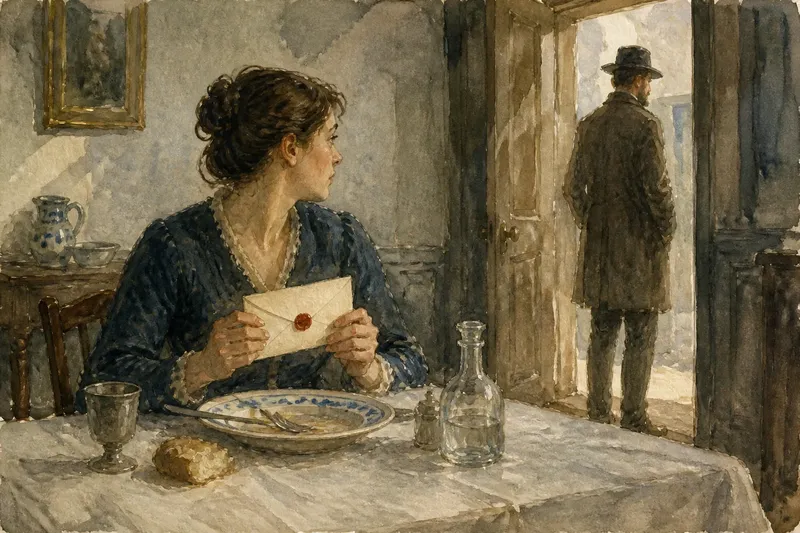
Imagine a painting showing a woman at a table with a sealed letter, an untouched meal and a man by the door. The starting evidence is only those visible details. You consider secrecy because the letter is sealed, then notice that the woman holds it while looking towards the man; you add a possible decision or exchange, but the untouched meal and doorway do not settle the story. Your resulting reading is that the letter may matter to their relationship, while its exact message and the figures’ intentions remain unknown.
Think of an object’s meaning like a word in a sentence: its neighbours and position affect what it seems to say. The analogy is limited—images do not follow one grammar—but it helps resist reading a detail on its own.
Use historical context to refine, not replace, interpretation
Objects can carry associations linked to a period, religious practice, social custom or artistic tradition. If the artwork’s background is known, ask whether that context fits the object’s appearance and role in this particular scene. Avoid assuming that a modern association would have meant the same thing to the artist or an earlier audience.
When context is uncertain, check a museum label, catalogue or reputable art-history resource. Keep what the source says distinct from what you can see, then return to the image and test whether the information fits. A source can clarify an identification without resolving every question about meaning.
How can you judge a symbol reading?
Does every object have a symbolic meaning?
No. An object can establish a setting, help organise the composition, identify someone or serve a practical purpose. Consider symbolism when the image offers a reason, such as an emphasis, repetition or relationship with another detail.
Can one object mean different things in different artworks?
Yes. Its setting, use, neighbours and historical context affect how it reads. A bird might be a living animal, a decorative motif or part of a religious image; the work itself must supply the clues.
What if two interpretations fit the same details?
State both and explain what each accounts for. You may favour the one that explains more of the visible relationships, while leaving unresolved details open.
When should you look up an artwork’s background?
Check a reliable source when the interpretation depends on unfamiliar customs, religious references, iconography or historical figures. Then compare the information with the image rather than treating it as a complete explanation.
Make the claim match the evidence
Phrase a reading so a reader can see how you reached it: “The letter may signal a private decision because the figure holds it apart from the others” is more accountable than “the letter means secrecy”. The first names both the inference and the clue behind it.
For the single-symbol trap in reading art, return to the object’s use, setting, relationships and alternatives before settling on a meaning. A careful interpretation does not need to eliminate uncertainty; it needs to show which details support the claim and where the image stops giving an answer.